Disclosure: This article contains affiliate links. If you purchase through them, we may earn a commission at no extra cost to you. We only recommend products we have genuinely reviewed and believe in.
If you feel persistently puffy, tired, or stuck at a weight that won't budge despite doing "everything right," there's a quiet process that might be working against you: chronic inflammation. It rarely gets blamed because its symptoms are vague and slow to build — but the food on your plate is one of its biggest drivers, and also one of its most powerful remedies.
Let's separate the real science from the wellness hype.
The Short Answer
Inflammation is a normal, healthy immune response to injury or infection. The problem is chronic, low-grade inflammation — a constant low simmer driven largely by a diet high in sugar, refined grains and ultra-processed food. It's linked to weight gain, fatigue and several chronic diseases. The fix is mostly dietary: eat fewer inflammatory foods, and more whole, colorful, antioxidant-rich ones.
First, What Inflammation Actually Is
Inflammation gets a bad reputation it doesn't fully deserve. In its normal form, it's one of the most important things your body does. When you cut your finger or catch a virus, your immune system floods the area with white blood cells and signaling chemicals to fight off the threat and repair the damage. That's acute inflammation, and it's life-saving.
The trouble starts when that response never switches off.
When the Simmer Never Stops
Chronic, low-grade inflammation is when the immune system stays mildly activated all the time, even without an injury or infection to fight. Instead of healing you, it slowly wears you down. Research links this persistent state to weight gain, insulin resistance, joint pain, fatigue, and a long list of chronic conditions including heart disease and type 2 diabetes.
And one of the most consistent triggers is diet. The standard pattern of refined sugar, refined grains, low-quality fats and ultra-processed food keeps the immune system gently inflamed — day after day.
The Gut Connection
Much of food-related inflammation starts in your digestive tract. The lining of your gut is designed to act as a selective barrier — letting nutrients through while keeping irritants out. A diet high in processed food, excess sugar, and additives can compromise that barrier and disrupt the balance of bacteria living there.
When the barrier is weakened, particles that should stay in the gut can provoke an immune response, keeping the whole system on low alert. This is why "eat for your gut" and "eat to lower inflammation" end up being almost the same advice: feed the beneficial bacteria with fiber and whole foods, and you calm the inflammatory signal at its source.
Foods That Fuel Inflammation
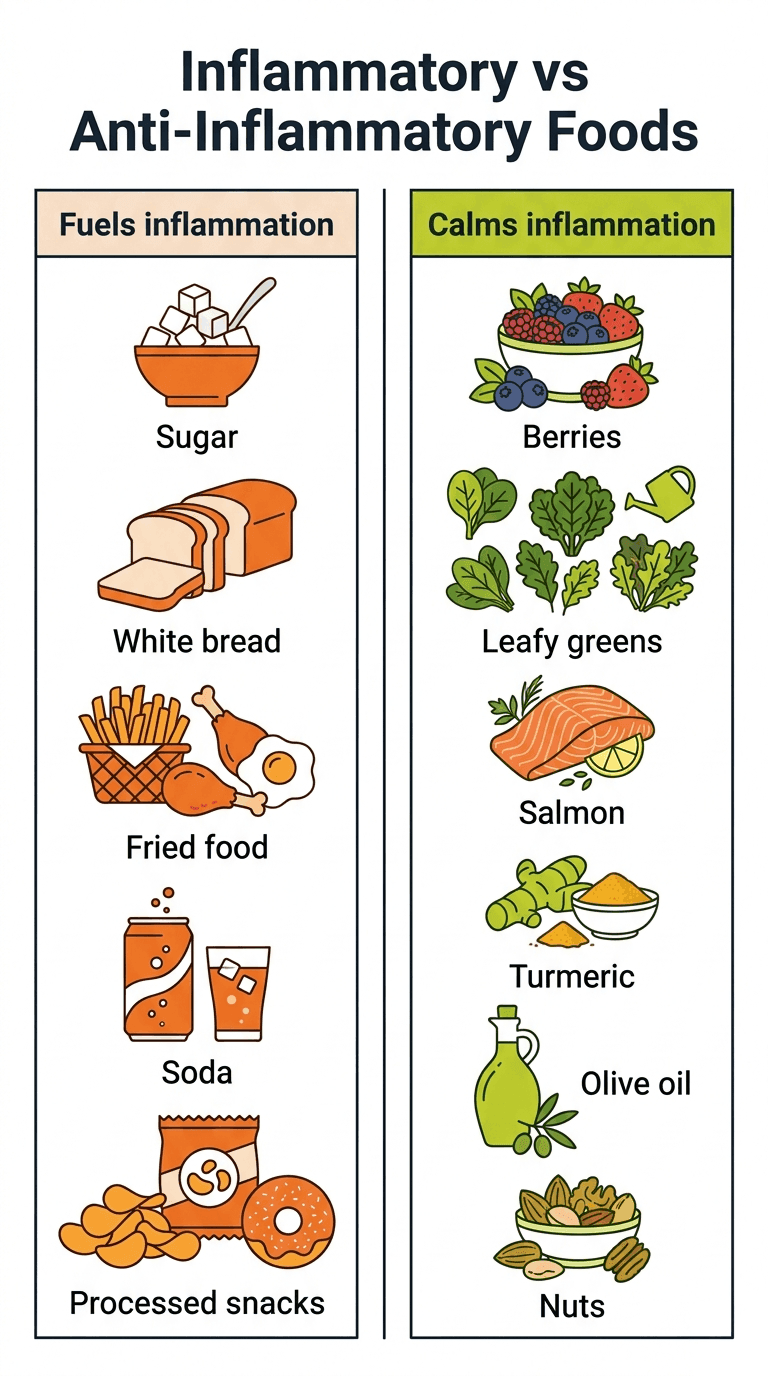
These are the usual suspects — worth reducing, not necessarily eliminating entirely:
- Added sugars and sugar-sweetened drinks
- Refined grains (white bread, most packaged baked goods)
- Fried foods and refined seed oils
- Ultra-processed foods and certain additives
- Excess alcohol
Foods That Calm Inflammation Down
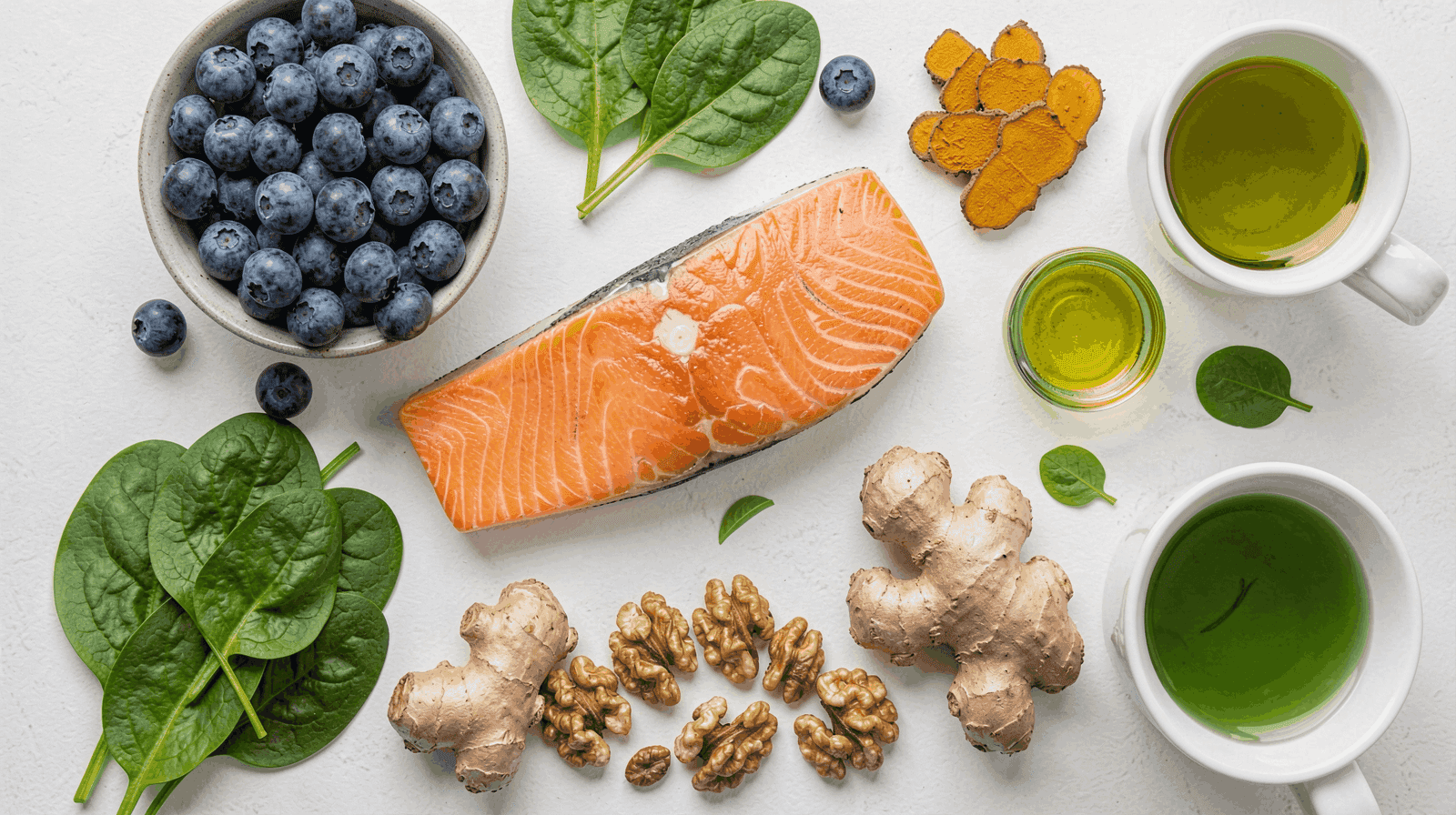
This is where eating gets genuinely powerful. Anti-inflammatory foods tend to be whole, colorful, and rich in fiber, antioxidants, and omega-3 fats:
- Berries — blueberries, strawberries, raspberries (antioxidants)
- Leafy greens — spinach, kale, chard
- Fatty fish — salmon, sardines, mackerel (omega-3s)
- Extra-virgin olive oil
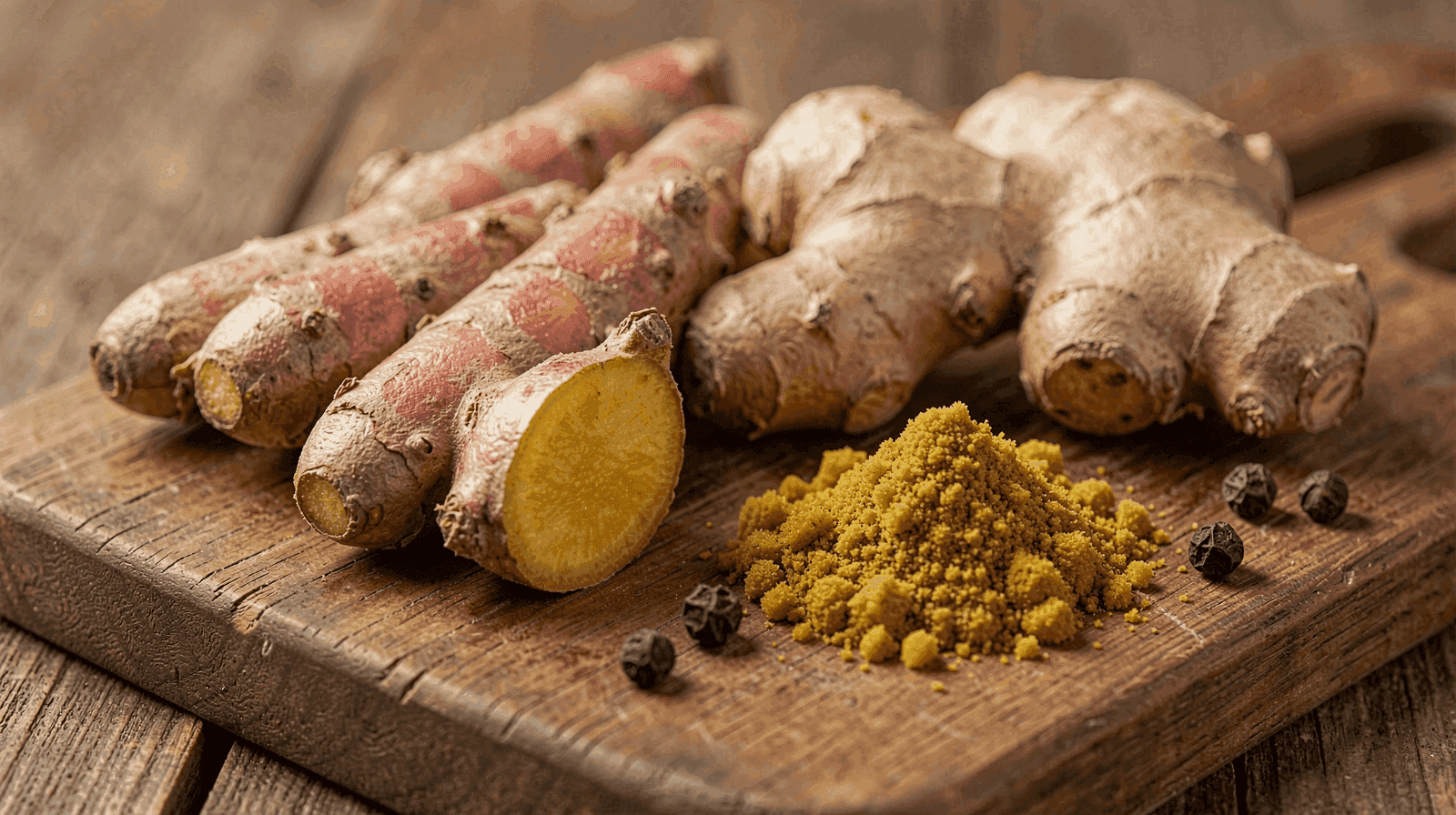
- Turmeric and ginger — both contain well-studied anti-inflammatory compounds
- Nuts and seeds — including flax and chia
- Other colorful vegetables — broccoli, peppers, tomatoes, beets
- Green tea
Pro Tip
Turmeric's active compound, curcumin, is poorly absorbed on its own — but adding a pinch of black pepper increases its absorption dramatically. It's why so many traditional recipes pair the two.
The Easiest Way to Eat More of Them
Knowing which foods to eat is one thing; actually getting several servings of them in every day is another. This is where blending earns its place. A single green smoothie can combine leafy greens, berries, ginger, and seeds — a concentrated dose of anti-inflammatory ingredients — in one five-minute glass that tastes like a treat.
It's a simple, repeatable habit that quietly stacks the deck in your favor: more antioxidants and fiber, fewer processed calories, and a gut that's getting fed what it actually needs.
Make anti-inflammatory eating effortless
The Smoothie Diet builds your day around nutrient-dense, antioxidant-rich smoothies — 36+ recipes, a 21-day plan, and a 60-day money-back guarantee.
See The Smoothie Diet →The Takeaway
You can't supplement your way out of an inflammatory diet, and you don't need an exotic protocol to fix it. The pattern that calms chronic inflammation is the same one that supports a healthy weight: less sugar, refined grain and ultra-processed food; more whole, colorful, fiber-rich plants and quality fats.
To see how these choices add up to real, lasting results, read our guide to the science of sustainable weight loss — and our full review of The Smoothie Diet if you want a structured way to get more of these foods in every day.
Disclaimer: This article is for informational purposes only and is not medical advice. Chronic inflammation can have many causes. Consult your healthcare provider before making significant dietary changes, especially if you have a diagnosed medical condition.
Frequently Asked Questions
- Q
What are the best anti-inflammatory foods?
The most consistently supported choices are berries, leafy greens, fatty fish like salmon, extra-virgin olive oil, nuts and seeds, and spices like turmeric and ginger. They're rich in antioxidants, fiber and omega-3 fats.
- Q
Can chronic inflammation cause weight gain?
Chronic, low-grade inflammation is associated with insulin resistance and weight gain, and the two tend to reinforce each other. An anti-inflammatory diet often helps with both at once, since the foods overlap heavily.
- Q
How quickly can diet reduce inflammation?
Some people notice less bloating and more energy within a couple of weeks of cutting inflammatory foods and adding whole, anti-inflammatory ones. Deeper changes take longer and depend on overall lifestyle, sleep and activity.
- Q
Are smoothies good for reducing inflammation?
They can be an excellent vehicle, because they let you combine several anti-inflammatory ingredients — greens, berries, ginger, seeds — in one serving. Just keep them low in added sugar and built around whole foods rather than juice and sweeteners.